


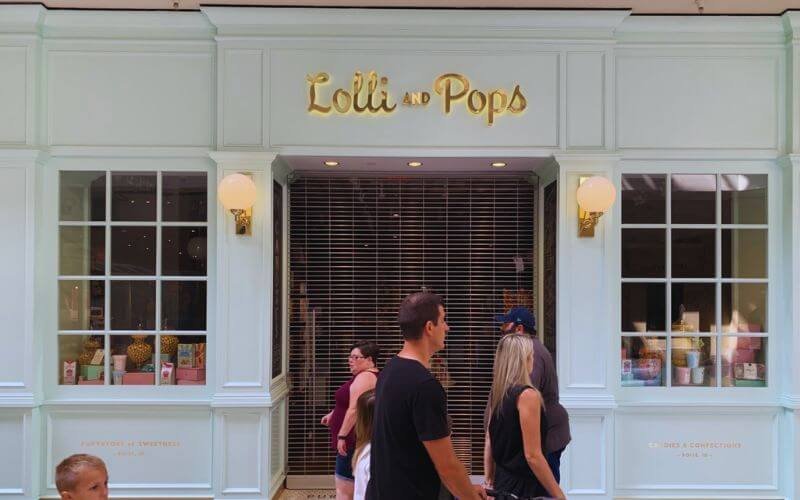
When a retailer files for bankruptcy, most people assume the stores are gone for good. You stop by the mall, see a “Store Closing” sign, and assume that’s the end. With Lolli & Pops, that assumption would be wrong.
The company did go through serious financial trouble. But bankruptcy and going out of business are not the same thing. Here’s a clear breakdown of what actually happened — the 2019 bankruptcy filing, who bought the company, what happened to the stores, and whether Lolli & Pops is still operating today.
Lolli & Pops Is Not Out of Business — But It Did Go Through Bankruptcy
Let’s get the most important point out of the way first: Lolli & Pops did not shut down. The company filed for Chapter 11 bankruptcy in 2019, which is a restructuring process, not a liquidation.
Chapter 11 allows a business to keep operating while it reorganizes its debts and obligations under court supervision. It’s the same tool used by major airlines, hotel chains, and retailers over the years — it doesn’t automatically mean the business is closing.
Lolli & Pops continued to run its stores through the bankruptcy process. In 2020, the company was sold through a court-approved bankruptcy sale and kept running under new ownership.
It’s worth being clear about the difference between four things that often get confused:
- Bankruptcy — a legal process to restructure or settle debts
- Store closures — shutting down specific underperforming locations
- Restructuring — reorganizing operations, costs, or ownership
- Complete shutdown — the business fully ceases to exist
Lolli & Pops went through the first three. It did not go through the fourth.
Why Lolli & Pops Filed for Bankruptcy in 2019
The financial picture behind the bankruptcy is worth understanding because it tells a familiar story in specialty retail.
According to ConfectioneryNews, the company reported approximately $61 million in revenue but was carrying an $8.5 million EBITDA loss. That means it was bringing in decent money on paper but losing more than it was earning once costs were factored in.
Revenue alone doesn’t indicate financial health. A business can have strong sales and still go under if its costs are too high. That’s exactly what happened here.
The primary pressure points were rent obligations and overhead costs tied to physical store locations. At the time of the filing, Lolli & Pops had around 69 stores across the United States, according to The Wall Street Journal. That’s a large footprint, and every location carries fixed costs regardless of how many customers walk through the door.
Mall-based specialty retailers face a structural problem: they depend on foot traffic, and that foot traffic has been declining for years. When mall visits drop, store revenue drops — but rent doesn’t. The gap between what a store earns and what it costs to keep open widens quickly.
This isn’t unique to Lolli & Pops. The same pattern has played out across dozens of specialty retailers. It’s a structural issue with the mall-based retail model, not necessarily a sign that customers disliked the product.
Who Bought Lolli & Pops and What Happened to the Stores
TerraMar Capital acquired Lolli & Pops out of bankruptcy in 2020. The Wall Street Journal reported that TerraMar’s acquisition plan included keeping a significant portion of the company’s 69 stores open rather than closing all of them.
TerraMar also planned to expand online sales and wholesale channels alongside the physical store business. That shift in strategy makes sense. A retailer with a heavy brick-and-mortar footprint and rising rent costs needs other revenue channels that don’t carry the same overhead.
Lolli & Pops is listed as an active portfolio company of TerraMar Capital, which supports the conclusion that the business continued operating under new ownership rather than being wound down.
One note of caution: verifying an exact current store count is difficult. The number has changed since the restructuring, and third-party database figures are not always reliable. What can be confirmed is that TerraMar’s stated plan was to keep a meaningful number of locations open and grow the non-store side of the business.
The Hammond’s Candies Acquisition Shows the Company Was Still Active
One of the clearest signals that Lolli & Pops was not winding down is what happened after the TerraMar acquisition: the company acquired Hammond’s Candies, a well-known candy manufacturer.
According to Just Food and the Lolli & Pops company blog, this move was framed as part of a broader growth and consolidation strategy. That matters because acquiring another brand requires capital, operational capacity, and a plan for the future. Companies don’t buy other companies when they’re getting ready to close.
That said, one acquisition doesn’t confirm that the company is in strong financial shape. It confirms that the business was active, pursuing growth, and functioning under TerraMar’s ownership. Those are meaningful signals, but they’re not the same as a clean bill of financial health.
Use this as evidence of continued operations and forward-looking intent — not as proof that everything is running perfectly.
What Lolli & Pops Looks Like as a Business Today
Based on available information, Lolli & Pops is still an operating business. The company website presents an active retail operation selling candy, chocolates, gummies, and gifts. Online sales capability is in place, which aligns with TerraMar’s stated strategy to grow beyond physical stores.
The company’s LinkedIn profile lists active locations and ongoing operations. There is no indication from current sources of a new bankruptcy filing, a liquidation, or a full shutdown.
For consumers wondering if they can still buy from Lolli & Pops — the answer appears to be yes, both online and through physical locations, though the store count today may differ from what it was before the 2019 bankruptcy.
For business professionals and retail watchers, Lolli & Pops is a useful example of how specialty retailers can survive financial distress through restructuring and a change in ownership rather than disappearing entirely. It’s not a perfect recovery story, but it’s not a collapse story either.
What Business Owners and Managers Can Take From This
The Lolli & Pops situation highlights a few practical lessons that apply well beyond candy retail.
Revenue is not the same as profitability. Sixty-one million dollars in revenue sounds solid. An $8.5 million EBITDA loss tells a different story. Businesses that focus on top-line growth without controlling costs can run into serious trouble even when sales look healthy.
Fixed costs are the biggest risk in physical retail. Rent is due every month regardless of how many customers show up. When foot traffic declines, a retailer with high fixed lease obligations has very little room to adjust. Businesses tied to long-term leases in high-rent locations should model what happens to their margins if revenue drops 15% to 20%.
Chapter 11 is a tool, not a tombstone. Many business owners and managers treat bankruptcy as synonymous with failure or closure. In practice, Chapter 11 exists specifically to give viable businesses a path to restructure and keep going. Lolli & Pops used it that way.
Diversifying revenue channels matters. TerraMar’s plan to grow online and wholesale alongside physical stores reflects a sensible response to the risks that caused the original problem. Any retailer that relies entirely on foot traffic is exposed to factors outside its control.
For more coverage of business cases, retail strategy, and practical management topics, visit The Business Flick.
The Bottom Line
Lolli & Pops is not out of business. The company filed for Chapter 11 bankruptcy in 2019, was acquired by TerraMar Capital in 2020, and has continued operating since. The Hammond’s Candies acquisition is a concrete sign of post-bankruptcy activity and expansion intent.
The bankruptcy itself was driven by the same pressures that have hit many specialty mall retailers — high fixed costs, declining foot traffic, and a gap between revenue and profitability that became unsustainable.
If you heard that Lolli & Pops was going out of business, the more accurate version of the story is that it went through a serious financial restructuring, changed hands, and kept running. That’s a meaningfully different outcome — and one that’s worth understanding clearly.
Also Read:
