


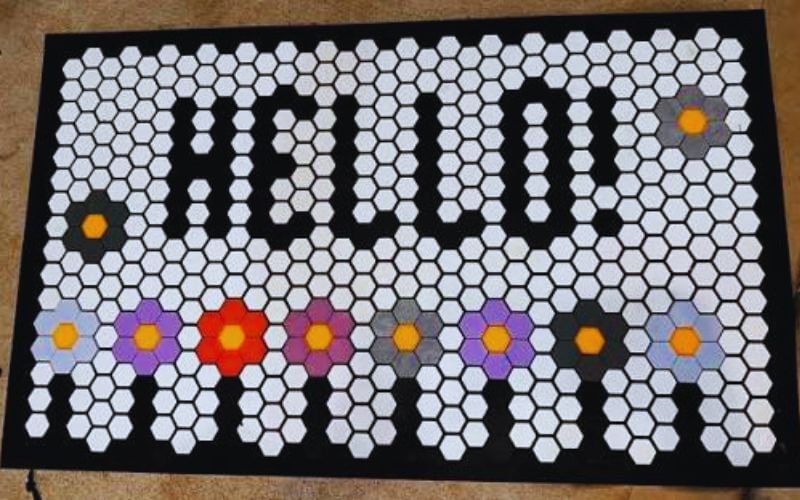
If you’ve searched for Letterfolk tile sets recently, you’ve probably hit a wall of “sold out” labels. Some products carry “final sale” tags. A few colors seem to have disappeared entirely. It’s easy to wonder: is this brand quietly winding down?
This article breaks down what Letterfolk actually is, why customers are worried, what those inventory signals really mean, and how to check the brand’s status before placing an order.
What Letterfolk Is and How the Business Works
Letterfolk was founded by husband-and-wife team Johnny and Joanna Galbraith. They built it as an online shop selling premium, handcrafted letter boards and tile sets — the kind of home décor products that photograph well and spread quickly on Instagram.
The brand carved out a strong following in the home décor and gift markets. Its design-forward aesthetic made it a natural fit for social media, and it grew fast. In a Boss Project podcast interview, the founders described the business growing “like gangbusters” over roughly a year and a half.
That context matters. Letterfolk is a small, product-based business — not a large retailer with a warehouse full of buffer stock. It runs on batch production, limited SKUs, and direct online sales. That kind of operation behaves very differently from a big-box store.
Why People Think Letterfolk Might Be Closing
The concern isn’t coming out of nowhere. Tile sets have been persistently out of stock, and at least one customer took to X (formerly Twitter) on February 19 to ask directly: “Is @letterfolk going out of business? Their tile sets are always sold out.”
On Instagram, Letterfolk has used the tag #FinalSale alongside promotions for specific tile colors — including Moon and Night Moon — with language encouraging customers to shop “before they’re gone.”
When you combine sold-out products, final sale tags, and limited color availability, it looks like a brand clearing out inventory before shutting the doors. In traditional retail, those signals often do mean a closure is coming. So it’s a reasonable conclusion — but it’s not the only one.
What “Sold Out” and “Final Sale” Actually Mean for a Small Brand
Small product businesses often produce in batches. Once a production run sells through, the item stays listed as sold out until the next batch is ready. From the outside, this can look permanent — but it usually isn’t.
Think of it like a popular restaurant that runs out of its most-ordered dish on a Friday night. The table next to you might joke that the place is going under. In reality, the dish sold out because demand was high. The restaurant is still open.
The same logic applies to “final sale” messaging. In retail, that tag almost always refers to a specific variant — a color, a size, a style — not the entire brand. A clothing company can discontinue a colorway while continuing to sell the rest of its line without interruption.
Letterfolk’s final sale messaging appears to be tied to specific tile colors, not the letter board category as a whole. Promoting Moon and Night Moon as final sale items, while urging customers to buy before they’re gone, is consistent with a product discontinuation — not a company shutdown.
High demand that creates stock shortages is actually a sign of a healthy product, not a failing business. The founders described rapid growth that required them to rethink outsourcing and scaling. Growing pains and inventory gaps often follow that kind of early traction.
No Official Announcement of Closure Exists
Here’s the clearest answer to the core question: as of available public sources, Letterfolk has made no official announcement of closing, filing for bankruptcy, or shutting down operations.
There is no press release. No founder statement. No credible report from a business or trade publication. Nothing in public records suggests the company has ceased operations or is in financial distress.
Meanwhile, the Instagram account shows active product marketing and ongoing promotions. That’s consistent with a business that is still running.
There’s an important difference between customer speculation on social media and official company communication. One is an opinion based on what a product page looks like. The other is a documented fact. Right now, the speculation exists. The fact does not.
Major business closures are also rarely silent. When a brand shuts down — especially one with a loyal customer base — there are usually announcements, customer emails, and media coverage. None of that has appeared here.
How to Verify a Brand’s Status Before You Order
Whether you’re shopping Letterfolk or any other small brand that’s showing closure signals, don’t rely on social media comments to make your decision. Here’s a practical checklist:
- Check recent social media activity. If the brand is posting regularly — new products, promotions, customer content — it’s almost certainly still operating. A dead or closing brand goes quiet first.
- Try the website and checkout flow. Add an item to the cart and go through the checkout steps. If payment processing is live and functioning, the business is active.
- Look for official announcements. Check the brand’s website homepage, email newsletter, and “About” or news pages. Founders typically communicate major changes through these channels first.
- Search for news coverage. A brand closure, acquisition, or bankruptcy filing usually generates some press. A quick search with the brand name plus “closing” or “bankruptcy” will surface relevant results if they exist.
- Check return and refund policies. A business on its way out may quietly remove or change these. If the policies look normal, that’s a good sign.
For Letterfolk specifically: the website appears functional, Instagram marketing is active, and no news of closure appears in any current public source. That points toward a business that’s still operating, even if specific products are in short supply or being discontinued.
What the Broader Small Business Picture Tells Us
It’s also worth noting the wider environment. A recent report from Enova International found that 93% of small businesses expect growth over the next year. Record numbers of new businesses were formed in early 2026. The overall climate for small, online-first brands is not one of widespread failure.
Small product brands like Letterfolk commonly streamline their offerings over time. They reduce SKUs, focus on their best-selling products, and cut colors or styles that don’t move. That’s sound business management — not a distress signal.
For more practical analysis of how small and growing businesses handle these kinds of inventory and product decisions, The Business Flick covers these topics in plain, direct terms.
Should You Buy From Letterfolk Right Now?
If you want a specific tile color that’s marked as final sale, buy it now if you want it. Those particular variants may not come back. That’s what final sale means — not that the brand is disappearing, but that those specific items are.
If you’re waiting on a restocked item, the sold-out status is likely a batch production issue, not a shutdown. Keep an eye on the website or sign up for restock notifications if that option is available.
Just be aware that final sale items typically come with different return policies. Read the terms before you check out.
The Bottom Line
There is no confirmed evidence that Letterfolk is going out of business. The signals customers are reacting to — sold-out tile sets and final sale tags on specific colors — are consistent with how small, product-based brands normally manage inventory and product lines.
Letterfolk’s active Instagram marketing, ongoing product promotions, and the complete absence of any official closure announcement all point to a business that is still operating. Some tile colors may be going away for good. The brand itself shows no signs of doing the same.
If the situation changes, official channels will be the first place to look. Until then, social media speculation is just that — speculation.
Also Read:
