


If you searched this question after seeing a pandemic-era headline or a “Closed” label on Google Maps, you’re not alone. The short answer is no Fishs Eddy is not going out of business. In fact, the opposite is happening.
This article covers the current operating status, why the rumors started, how the business has changed over the years, and what a recent expansion says about where things are headed.
Fishs Eddy Is Still Open and Just Added a Second Location
The flagship store at 889 Broadway in Manhattan’s Union Square/Flatiron area is open seven days a week. Hours are Monday through Saturday, 10am to 8pm, and Sunday 10am to 6pm. The online store is also active, with current collections and a best-sellers section.
In early October 2025, Fishs Eddy opened a second New York City location in DUMBO, Brooklyn, at 81 Front Street. This isn’t a clearance pop-up or a sign of desperation. According to Forbes, it’s a 3,800-square-foot space that includes vintage finds, signature merchandise, a coffee bar, and a classic soda fountain.
The store also has a presence on the third floor of Liberty London, which gives it an international retail footprint beyond New York. The brand’s own website puts it simply: “We’ve been doing this forever and we’re just getting started.”
Opening a new location in one of Brooklyn’s most visited neighborhoods is not what a business does when it’s winding down.
Where the “Going Out of Business” Idea Came From
The concern is understandable, and it has a real origin point. During the COVID-19 pandemic, Fishs Eddy was publicly described as “gasping for air.” The store struggled with rent obligations and reduced foot traffic, like many independent NYC retailers at the time.
Those reports spread widely. People shared them online, and the worry stuck even years after the situation improved. A Reddit thread from 2020 referencing those pandemic struggles still shows up in search results today, which keeps the concern alive for people who don’t dig deeper.
There’s also a simpler explanation for some of the confusion. Directory sites like Yelp and Google show “Closed now” based on the time of day. If someone checks at 9pm on a Sunday, the listing shows the store as closed. Some readers interpret that as permanently closed, which it isn’t.
A third factor is product change. Longtime customers who remember Fishs Eddy as a place to find old restaurant plates and factory surplus may notice the store looks different now. Less vintage. More original designs. That shift can feel like decline to someone who loved the old format, even when the business itself is doing fine.
The takeaway: when you see conflicting information about a store’s status online, always check the official website or social channels before drawing conclusions.
The Business That Started With Rescued Restaurant Plates
To understand where Fishs Eddy is now, it helps to know where it came from. The store was founded around 1986 by Julie Gaines and David Lenovitz in Manhattan. The name comes from a small town called Fishs Eddy in upstate New York.
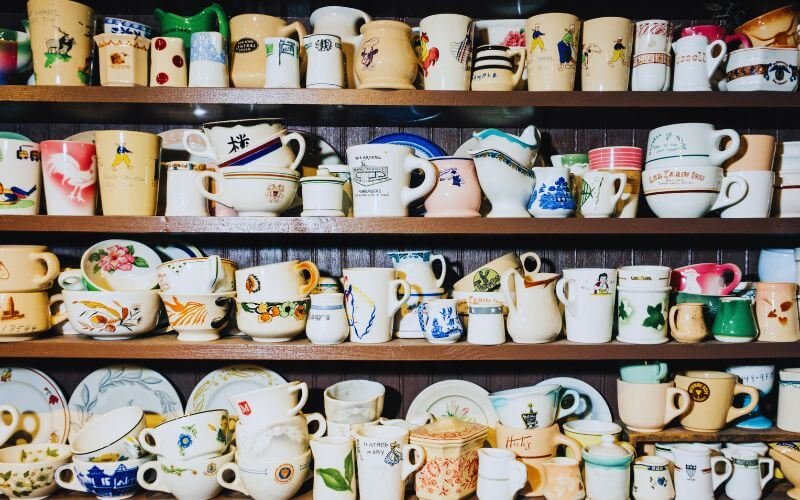
The original concept was simple and clever: buy surplus, discontinued, and rescued dishware from American restaurants, hotels, and factories, then resell it. Think heavy ceramic plates stamped with diner logos, thick coffee mugs from hotel chains, or sturdy bowls from hospital cafeterias.
There was a real market for it. Customers loved the durability, the nostalgia, and the quirky character of pieces that had a history. The store built a loyal following and became a recognizable fixture in the Union Square/Flatiron neighborhood over several decades.
It wasn’t just a shop. For a lot of New Yorkers, it was a destination the kind of place you brought out-of-town guests or spent an hour browsing without a specific plan to buy anything.
How the Business Model Shifted When the Original Supply Ran Out
Here’s where the real business story gets interesting. As American manufacturing declined, the domestic factory surplus that originally stocked Fishs Eddy became harder and harder to find. Fewer factories meant fewer rescued plates. The treasure hunt that built the brand started running low on treasure.
A lot of businesses in that position simply close. Fishs Eddy didn’t. Instead, the owners made a significant pivot: they stopped relying entirely on found goods and started designing their own products.
This is the key business evolution to understand. Fishs Eddy moved from being a reseller of discovered goods to being a designer and brand with its own collections. The sourcing model changed completely, but the core promise durable, restaurant-grade dishware with personality stayed the same.
Current collections feature whimsical, New York-themed designs: cityscapes, borough maps, typographic pieces, and pop culture or political series. Some products are now manufactured overseas, which is a practical response to supply realities, not a departure from the brand’s identity.
Think of it this way. In the early days, Fishs Eddy’s job was to find things that already existed and bring them to customers. Today, the job is to create things worth finding in the first place. The result on the shelf looks different, but the spirit behind it is the same.
This kind of pivot from curated reseller to original designer is actually a useful model for any small business that depends on a specific supply chain. When the supply changes, the business has to change with it or stop operating. Fishs Eddy chose to change.
For entrepreneurs and small business owners watching this story, it’s a clear example of what adaptation looks like in practice. It’s not glamorous, and longtime customers may push back. But it’s what keeps a business alive across decades while others close around it.
If you’re researching how independent retailers navigate economic pressure, supply chain disruption, or a shift in consumer expectations, stories like this are worth studying. The Business Flick covers practical business examples like this for owners and managers who want real insight, not abstract strategy advice.
What This All Means for Anyone Still Wondering
Fishs Eddy is not going out of business. It survived the pandemic when many comparable stores did not. It adapted its business model when its original supply chain dried up. And in 2025, it opened a second New York location with a coffee bar and soda fountain not exactly the move of a company preparing to shut its doors.
The confusion around its status comes from a combination of outdated pandemic coverage, directory listings that show time-based “closed” status, and product changes that feel unfamiliar to longtime customers. None of those things mean the business is in trouble.
If you want to visit, the Manhattan store at 889 Broadway is open seven days a week. The DUMBO location at 81 Front Street in Brooklyn is now open as well. And if you’re not in New York, the online store is active with current inventory.
The store has been operating for nearly 40 years. It changed what it sells, where it sources products, and now where it operates and it’s still standing. That’s the actual story.
Also Read:
